In 40 seconds
Freezing of gait (FOG) — sudden, brief episodes of inability to step despite intention — affects up to 60% of PD patients in later stages and is the most disabling motor symptom in advanced PD. Clinical rTMS over the supplementary motor area (SMA) has the strongest evidence for FOG: Mi 2019 (n=30, 10 Hz SMA, 10 sessions) reduced the Freezing-of-Gait Questionnaire and MDS-UPDRS-III with benefits persisting 4 weeks. A 2025 gait-focused meta-analysis (J Clin Med) identified HF-SMA stimulation ≥20 min × 10 sessions as the optimal protocol for gait speed. Cerebellar rTMS (Koch 2024) is emerging. Floor-based PEMF mats are an under-discussed falls hazard in PD — the trip risk during freezing episodes can outweigh any putative benefit. Standard non-pharmacological interventions remain: cued physiotherapy, laser shoes, structured exercise, and (in refractory cases) DBS targeting the pedunculopontine nucleus.
Quick facts
- Best-supported protocol: 10 Hz SMA rTMS, 10 sessions over 2 weeks (Mi 2019)
- Optimal dose (2025 meta): HF-SMA ≥20 min × 10 sessions for gait speed
- Cerebellar emerging target: Accelerated cerebellar rTMS improved gait velocity (Koch 2024)
- FOG-Q reduction: Significant in real-rTMS vs sham; persisted 4 weeks post-treatment
- Floor-mat falls risk: Under-flagged hazard — PEMF mat = additional trip surface during freezing episodes
- Standard non-pharm: Cued physiotherapy, laser shoes, music/metronome, structured exercise
- DBS for refractory FOG: Some patients benefit from PPN-DBS (highly specialist)
What the gait evidence shows — and the floor-mat hazard
Freezing of gait is a unique PD symptom. It is not a slow gait — it is a sudden, brief, often start-or-turn-triggered inability to step despite intact intention. Patients describe it as their feet being glued to the floor. It is the strongest predictor of falls in advanced PD and one of the hardest symptoms to treat pharmacologically.
Why SMA is the target
The supplementary motor area mediates anticipatory postural adjustments — the unconscious weight-shift that precedes a step. In PD with FOG, SMA function is impaired. HF-rTMS over SMA appears to restore some of that anticipatory function. Mi 2019 (n=30, 2:1 randomisation) showed 10 Hz SMA rTMS over 10 sessions reduced both the FOG-Q (a patient-reported measure) and the MDS-UPDRS-III, with benefits sustained 4 weeks post-treatment. The 2025 J Clin Med meta-analysis aggregating gait outcomes identified HF-SMA at ≥20 min per session over 10 sessions as the optimal protocol for gait speed.
The cerebellar option
Koch 2024 published an accelerated cerebellar rTMS protocol that improved gait velocity in a small PD cohort. The cerebellum modulates gait via its connections to the brainstem locomotor centres. This is research-grade work, not yet ready for clinical recommendation, but is one of the more promising emerging targets.
What about PEMF mats and gait?
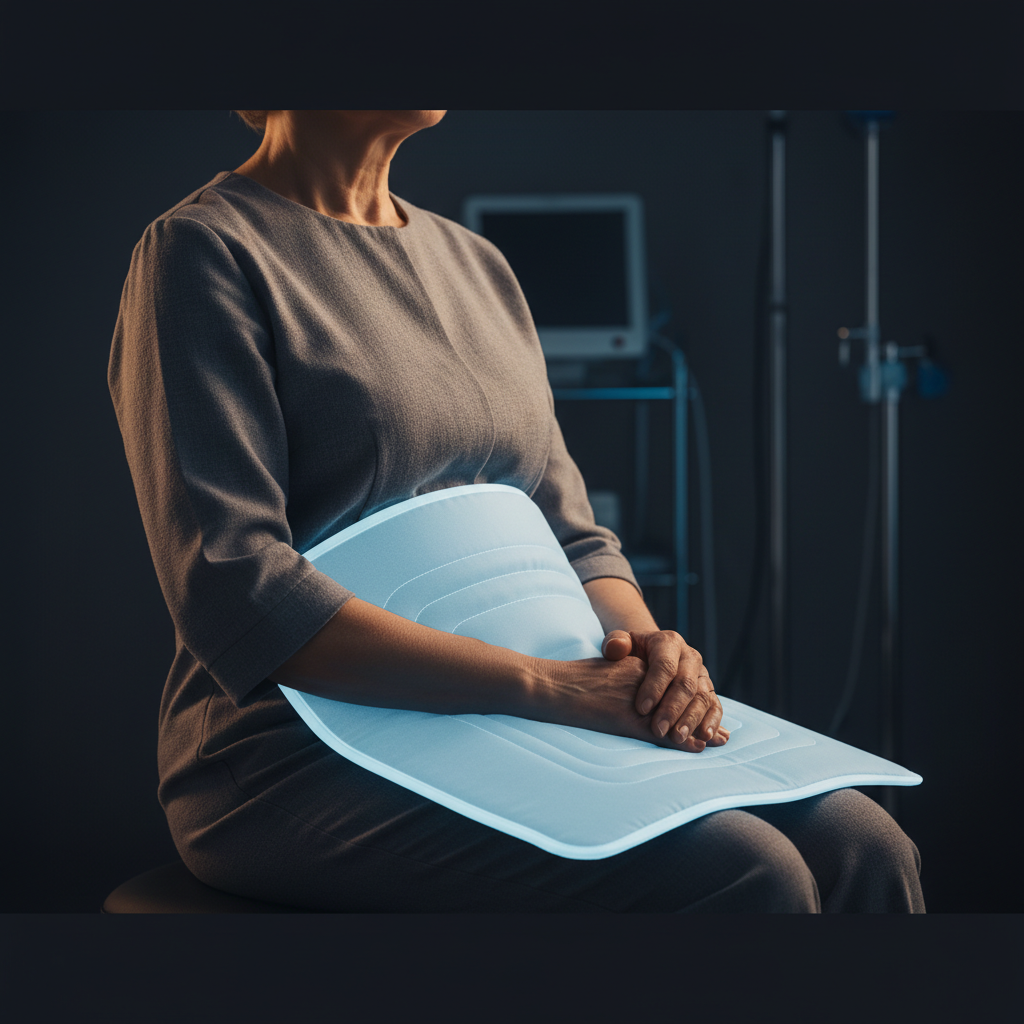
There is no PEMF-mat trial showing reduced freezing of gait. The Danish T-PEMF trials measured sit-to-stand and tremor coherence but not gait per se. Consumer PEMF mats have no FOG evidence. Worse, floor-based PEMF mats create a falls hazard. A PD patient who freezes when crossing a doorway or starting from rest may freeze when stepping over a thicker-than-floor mat. Orthostatic hypotension on getting up from a mat compounds the risk. This is a real, under-discussed safety issue in the consumer PEMF marketing for Parkinson's.
Standard non-pharmacological interventions
The interventions with the strongest evidence for FOG are well-validated and freely available:
- Cued physiotherapy — visual cues (lines on the floor), auditory cues (metronome), and haptic cues (vibrating insoles) bypass the SMA-dependent anticipatory step and trigger movement via external cueing pathways.
- Laser shoes — project a line on the floor at each step, providing a visual cue. Established benefit in some FOG patients.
- Music and rhythmic auditory stimulation — entrainment to a metronome or familiar music can break FOG episodes.
- Structured exercise — particularly aerobic activity and tai chi, which improve dynamic balance.
- Specialist movement-disorders physiotherapy — NICE NG71 endorses physiotherapy as a core component of PD management.
DBS for refractory FOG
Pedunculopontine nucleus (PPN) DBS has been studied for refractory FOG in advanced PD. Results are mixed; it is highly specialist, not routinely available. Standard STN-DBS sometimes helps FOG but can also worsen it — particularly the levodopa-refractory subtype.
The honest summary
If FOG is the main problem, the highest-yield interventions in 2026 are: a movement-disorders physiotherapist, cueing strategies (visual, auditory, haptic), structured exercise, and review of medication timing. Clinical rTMS to SMA has real published signal and is worth asking the neurologist about for trial enrolment. A consumer PEMF mat has no FOG evidence and introduces a falls risk that is not worth taking.
Frequently asked questions
Will rTMS to my dad's brain help his freezing of gait?
Mi 2019 and the 2025 J Clin Med meta-analysis both show HF-rTMS over the SMA reduces freezing-of-gait questionnaire scores in PD. The benefit is real but modest at the group level. UK access is via clinical trial enrolment — ask the neurologist.
Are laser shoes available on the NHS?
Provision varies by trust. Some movement-disorders services prescribe them; others suggest patients purchase privately. Ask your specialist nurse — the cost is typically under £200 and the evidence is reasonable for selected patients.
Is the PEMF mat dangerous in someone who freezes?
It can be. A thicker-than-floor mat is a trip hazard, especially at doorways or transitions where freezing tends to occur. Orthostatic hypotension on getting up from a floor mat compounds the falls risk. Floor mats are not recommended for advanced FOG patients.
Can a metronome really help freezing?
Yes. Rhythmic auditory stimulation at the patient's normal cadence or slightly faster can break freezing episodes. Free metronome apps work. Try it before spending on equipment.
What about PPN-DBS — should we ask about it?
PPN-DBS is highly specialist and not widely available. It is appropriate to ask the movement-disorders consultant whether your relative would be a candidate, but expect a cautious answer — results are mixed and patient selection is critical.
Does levodopa help freezing?
Sometimes — levodopa-responsive FOG benefits from medication optimisation. Levodopa-refractory FOG is the harder problem and is where physiotherapy, cueing and (in selected patients) PPN-DBS come in.
Is exercise really better than PEMF for gait?
Exercise has stronger evidence. Aerobic training, resistance training and tai chi have published RCT signal for gait outcomes in PD. PEMF mats do not. If choosing one investment, choose the exercise programme.
Could a PEMF mat help my own back pain as a carer?
Yes — that is a legitimate, separate use case. PEMF over the back for chronic pain in adults without implants has acceptable wellness evidence. Just use it carefully (not on the floor where your relative could trip on it).
Related Parkinson's pages on PEMF UK
Looking for a PEMF clinic in the UK?
We list every credible PEMF therapy provider in the UK. Please remember: no UK clinic can legally claim to treat Parkinson's with PEMF or rTMS.