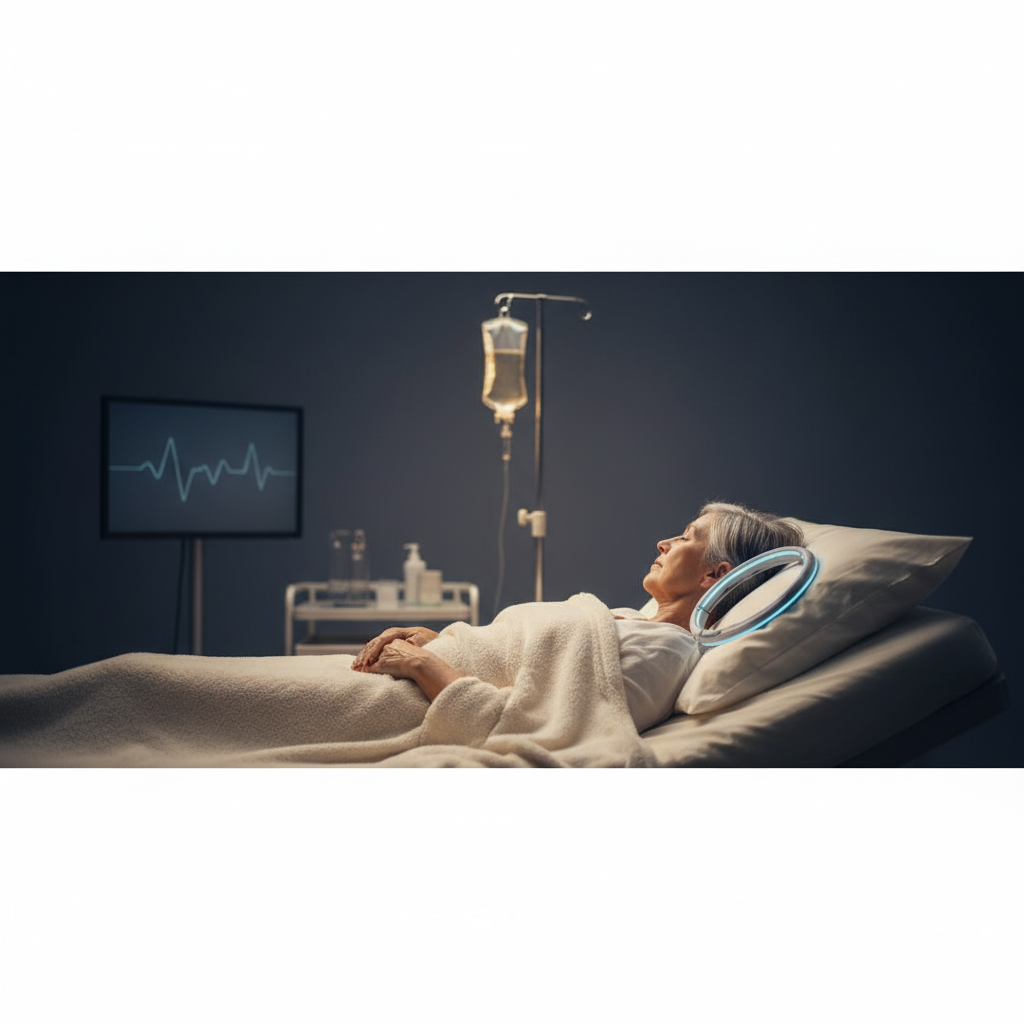
In 40 seconds
Stroke is the largest and most-studied indication in the rTMS literature outside depression. The strongest evidence is for low-frequency contralesional M1 rTMS in subacute (1–6 month) stroke for upper-limb motor recovery — Lefaucheur 2020 Level A, Hsu 2012 meta SMD 0.55. In chronic stroke the picture is more mixed: the Nexstim NICHE 2018 multisite phase-III RCT (n=199) missed its primary endpoint (67% active vs 65% sham response). Strong meta-analyses exist for post-stroke depression (Shen 2017), aphasia (Naeser lineage), dysphagia (Park 2021 bilateral pharyngeal), neglect (Koch 2012 cTBS) and lower-limb gait. As of May 2026 no rTMS device holds FDA or MHRA marketing authorisation for any stroke indication — popular claims of "FDA-cleared rTMS for stroke" are incorrect. NICE NG128 (acute) and NG236 (rehabilitation) do not include rTMS as a routine recommendation. UK access is via research trial or private clinic. Consumer PEMF mats have no stroke-recovery RCT base.
Quick facts
- Strongest evidence: LF contralesional M1 rTMS in subacute stroke for upper-limb motor (Lefaucheur 2020 Level A)
- Hsu 2012 meta-analysis: 20 RCTs / SMD 0.55 favouring rTMS for motor function
- NICHE 2018 (negative): n=199 chronic stroke, contralesional 1Hz — primary endpoint missed
- FDA stroke clearance: None as of May 2026 — circulating claims are incorrect
- MHRA stroke clearance: None
- NICE NG128 (acute) / NG236 (rehab): rTMS not a routine recommendation
- NHS commissioning: Not commissioned for stroke
- Consumer PEMF in stroke recovery: No completed RCT base
- Critical safety: Post-stroke epilepsy 5-10% — raised seizure threshold consideration
Important fact-check — no FDA/MHRA stroke clearance
Phase of recovery matters more than device
Stroke rTMS evidence varies sharply by phase. The trial protocol, the cortical target, and the expected effect size all change.
Acute (≤14 days)
Khedr 2005 / 2009 / 2010 showed early HF-rTMS over affected M1 improved motor function. Safety carefully considered — risk of haemorrhagic transformation and seizure. Research-grade access only.
Subacute (1-6 months)
The strongest evidence window. Lefaucheur 2020 Level A for LF contralesional M1 rTMS. The interhemispheric-competition model (Murase 2004) is the theoretical basis — suppressing the over-active contralesional hemisphere allows lesion-side recovery.
Chronic (>6 months)
NICHE 2018 (n=199, multisite, contralesional 1Hz) was the largest chronic-stroke trial and missed its primary endpoint. Meta-analyses (Hsu 2012, McDonnell 2017) show smaller effects in chronic phase. Personalised, target-specific protocols may help.
Evidence at a glance — landmark trials
| Study | Year | Phase / n | Intervention | Result | Source |
|---|---|---|---|---|---|
| Murase et al. | 2004 | Chronic stroke | TMS — mechanistic | Interhemispheric competition shown — basis for contralesional inhibition model | Ann Neurol |
| Khedr et al. | 2005 | Acute / n=52 | HF-rTMS, affected M1, 10 days | Improved motor scores; sustained at 10 days post | PMID 16087918 |
| Fregni et al. | 2006 | Chronic / n=15 | 1 Hz contralesional M1 | Improved motor function vs sham | Stroke |
| Khedr et al. | 2010 | Acute, 1-yr follow-up | HF-rTMS affected M1 | Long-term motor function gains | PMID 19678808 |
| Koch et al. | 2012 | Subacute neglect / n=20 | cTBS, parietal cortex | Reduced neglect; functional gains | Neurology |
| Hsu et al. (meta) | 2012 | 20 RCTs / n=478 | rTMS for motor | SMD 0.55 favouring rTMS | PMID 22713491 |
| Hao et al. (Cochrane) | 2013 | Cochrane review | rTMS for stroke | Insufficient evidence to support routine use (at time of review) | Cochrane |
| Shen et al. (meta) | 2017 | Post-stroke depression | rTMS for depression | Significant reduction in HDRS | PMID 28092847 |
| McDonnell & Stinear (meta) | 2017 | Updated meta | TMS motor post-stroke | Reframes simple interhemispheric model — bimodal balance recovery | Brain Stim |
| NICHE (Harvey et al.) | 2018 | Chronic / n=199 | 1 Hz contralesional + therapy | NULL — 67% active vs 65% sham. FDA submission not approved. | Stroke |
| Lefaucheur et al. (guideline) | 2020 | Cross-indication | Expert update | Level A for LF contralesional M1 in subacute stroke | PMID 31901449 |
| Park et al. | 2021 | Dysphagia | Bilateral pharyngeal cortex | Improved swallow function vs unilateral and sham | Front Neurol |
| Wang et al. (meta) | 2023 | iTBS upper-limb | iTBS for arm motor | Significant FMA improvement vs sham | PMC10602812 |
| Yin et al. (meta) | 2024 | Post-stroke cognition | NIBS network meta | HF-rTMS improved MoCA scores | PMID 38925887 |
| Zhang et al. (meta) | 2024 | Lower-extremity | rTMS for leg/gait | Improved gait velocity | PMC11310066 |
| Xu et al. (meta) | 2025 | Aphasia | rTMS network meta | LF contralesional Broca's homologue most effective | Front Neurol |
The honest read
rTMS for subacute stroke motor recovery is one of the strongest non-depression rTMS evidence areas — Level A in Lefaucheur's guideline. Chronic stroke is more mixed; the largest pivotal trial (NICHE 2018) failed. The biggest fact-check is that no rTMS device holds FDA or MHRA stroke clearance — claims to the contrary are incorrect.
Sub-symptom breakdown
Upper-limb motor recovery
The strongest single signal. LF contralesional M1 rTMS in subacute stroke — Lefaucheur 2020 Level A. iTBS is also showing positive meta signal (Wang 2023). Read the arm recovery page →
Lower-limb motor and gait
Zhang 2024 meta-analysis showed improved gait velocity. Cerebellar rTMS is an emerging target. Read the leg recovery page →
Aphasia
Naeser-lineage trials use 1 Hz over right Broca's homologue to lift transcallosal inhibition. Xu 2025 network meta confirms this as the most effective protocol. Read the aphasia page →
Post-stroke depression
Shen 2017 meta-analysis confirmed significant HDRS reduction. Wei 2025 network meta extended this. NICE depression IPG542 framework applies.
Dysphagia
Park 2021 bilateral pharyngeal-cortex protocol improved swallow function. Standard NICE NG128 dysphagia pathway (SALT-led) remains primary.
Neglect
Koch 2012 cTBS over contralesional parietal cortex reduced spatial neglect.
Post-stroke fatigue
Modest pilot evidence; no phase-3 RCT. Read the fatigue page →
Cognitive impairment
Yin 2024 network meta showed HF-rTMS improved MoCA scores. Cognitive rehabilitation remains first-line.
UK regulatory position
NICE NG128 (Stroke and transient ischaemic attack in over-16s) and NG236 (Stroke rehabilitation in adults) do not include rTMS as a routine recommendation. Standard rehabilitation pathways — physiotherapy, occupational therapy, speech & language therapy, neuropsychology — are the endorsed framework. nice.org.uk/guidance/ng128 · nice.org.uk/guidance/ng236
RCP National Clinical Guideline for Stroke 2023 notes rTMS is "not currently recommended outside clinical trials" for stroke recovery.
NHS England does not commission rTMS for stroke. UK access is via research trial or private clinic. ASA CAP Section 12 binds private clinics — efficacy claims for stroke require appropriate licensing, which no device holds.
MHRA classifies consumer PEMF as Class IIa wellness device. No PEMF or rTMS device holds MHRA approval for stroke.
FDA (for contrast) has cleared rTMS devices for depression, OCD, smoking cessation, anxious depression and adolescent depression — but no rTMS device is FDA-cleared for any stroke indication. The Nexstim NICHE submission was unsuccessful; Magstim Horizon Inspire (Nov 2024) and MagVenture clearances are depression-only.
Safety — post-stroke epilepsy is the key issue
Post-stroke epilepsy (5-10%)
Stroke is one of the commonest causes of new-onset adult epilepsy. rTMS-induced seizure risk (~0.1%) is meaningful in this population. Detailed seizure history required pre-rTMS.
Seizure-threshold-lowering meds
SSRIs (common post-stroke), tramadol, bupropion. Medication review essential before rTMS.
Metallic implants near coil
Aneurysm clips, cochlear implants, deep brain stimulators, vagus nerve stimulators — exclusions. Post-stroke patients may have cardiac stents (usually fine, away from head).
Craniectomy
Patients with hemicraniectomy after stroke require careful rTMS planning. Discuss with the neurosurgeon.
Capacity to consent
Stroke may impair capacity acutely or chronically. Mental Capacity Act 2005 best-interests process where capacity in doubt.
Falls risk
Floor-based PEMF mats are a trip hazard for stroke survivors with hemiparesis. Bed/chair-based application reduces risk.
Frequently asked questions
Can rTMS help my stroke recovery?
Subacute stroke (1-6 months post) has the strongest evidence — Lefaucheur 2020 Level A for LF contralesional M1 rTMS for upper-limb motor recovery. Chronic phase has weaker, mixed evidence. Access in the UK is via research trial.
Is rTMS for stroke FDA-cleared?
No. As of May 2026 no rTMS device holds FDA marketing authorisation for any stroke indication. The Nexstim NICHE Phase III trial (2018, n=199) missed its primary endpoint and the FDA submission was not approved.
Is rTMS on the NHS for stroke?
No. NHS England does not commission rTMS for stroke recovery. NICE NG128 and NG236 do not include it as a routine recommendation.
What about a PEMF mat for stroke recovery?
Consumer PEMF mats have no completed RCT for stroke recovery. The mechanism is fundamentally different from clinical rTMS.
Does the phase of stroke matter?
Critically. Subacute (1-6 months) has the strongest evidence; chronic phase is more mixed; acute requires careful safety consideration. Window and target both matter.
Can rTMS help my hand recovery?
Hand-motor recovery is subset of upper-limb motor evidence. LF contralesional M1 rTMS in subacute phase has Level A in Lefaucheur 2020. Hand-specific protocols are emerging.
What about aphasia?
Naeser-lineage trials (1 Hz over right Broca's homologue) show benefit. Xu 2025 network meta confirms. Standard SALT remains primary.
Will rTMS help my post-stroke depression?
Shen 2017 meta-analysis showed significant HDRS reduction. NICE IPG542 framework for depression rTMS applies.
Can rTMS help post-stroke fatigue?
Small pilot evidence only. No phase-3 RCT. NICE recommends addressing modifiable causes first.
Is rTMS safe with post-stroke seizure history?
Increased caution. rTMS-induced seizure risk is ~0.1% in general populations. Post-stroke epilepsy is common (5-10%); detailed history and medication review required.
What's the difference between rTMS and PEMF?
rTMS uses high-intensity (1-2 Tesla) clinical magnetic pulses. PEMF uses low-intensity (microtesla) consumer-mat magnetic fields. Different mechanisms, different evidence bases.
Can a PEMF mat help my hemiplegic arm?
No completed RCT supports this. Standard rehabilitation (physio, OT, task-specific training) remains evidence-based.
How long after my stroke can I have rTMS?
Subacute window (1-6 months) has the strongest evidence. Chronic (>6 months) trials exist but with smaller effect sizes.
Will rTMS undo my stroke?
No. rTMS is a recovery-enhancing intervention, not a stroke-reversing one. Realistic expectations matter.
Can I have rTMS if I have an aneurysm clip?
Generally contraindicated. Discuss with the neurosurgery team.
What about transcranial direct current stimulation (tDCS)?
Different technology — low-amplitude direct current via scalp electrodes. Some post-stroke trial evidence but separate from rTMS.
Is iTBS faster than standard rTMS for stroke?
iTBS sessions are ~3 minutes vs ~30 minutes for HF-rTMS. Wang 2023 meta shows iTBS effective for upper-limb stroke recovery.
Can a UK clinic claim to treat stroke with PEMF?
No. ASA CAP Section 12 restricts efficacy claims. No PEMF or rTMS device holds UK marketing authorisation for stroke.
Should I use PEMF for the stroke-related back pain from my altered posture?
Musculoskeletal back pain in adults without implants has acceptable PEMF evidence (see /lower-back-pain). Standard physio pathway remains first-line.
How do I find a UK rTMS-stroke trial?
ClinicalTrials.gov is the registry. Major UK stroke research centres (Newcastle, Glasgow, Oxford, Manchester) recruit. Ask your stroke physician about local research.
Related pages
Sources
- Murase N, et al. Interhemispheric interactions in chronic stroke. Ann Neurol, 2004.
- Khedr EM, et al. Therapeutic trial of rTMS after acute ischemic stroke. 2005. PMID 16087918
- Fregni F, et al. 1Hz contralesional rTMS in chronic stroke. Stroke, 2006.
- Khedr EM, et al. Long-term rTMS after acute ischaemic stroke. 2010. PMID 19678808
- Koch G, et al. cTBS for neglect recovery. Neurology, 2012.
- Hsu WY, et al. rTMS motor function meta-analysis. 2012. PMID 22713491
- Hao Z, et al. Cochrane: rTMS for stroke. 2013.
- Shen X, et al. rTMS for post-stroke depression meta. 2017. PMID 28092847
- McDonnell MN, Stinear CM. TMS motor cortex post-stroke meta. Brain Stim, 2017.
- Harvey RL, et al. NICHE chronic stroke trial. Stroke, 2018.
- Lefaucheur JP, et al. Evidence-based rTMS guidelines update. 2020. PMID 31901449
- Park E, et al. Bilateral pharyngeal rTMS for dysphagia. Front Neurol, 2021.
- Wang Y, et al. iTBS upper-limb stroke meta. 2023.
- Yin S, et al. Post-stroke cognitive impairment network meta. 2024. PMID 38925887
- Zhang Y, et al. Lower-extremity rTMS in stroke meta. 2024.
- Xu Y, et al. Aphasia rTMS network meta. 2025.
- NICE. NG128 Stroke and transient ischaemic attack in over-16s. nice.org.uk/guidance/ng128
- NICE. NG236 Stroke rehabilitation in adults. nice.org.uk/guidance/ng236
- NICE. IPG542 rTMS for depression.
- Royal College of Physicians. National Clinical Guideline for Stroke for the UK and Ireland 2023.
- MagVenture FDA clearances (verified — no stroke indication). magventure.com/us/fda-clearances
Looking for a PEMF clinic in the UK?
We list every credible PEMF therapy provider in the UK. No UK clinic can legally claim to treat stroke with PEMF or rTMS.