In 40 seconds
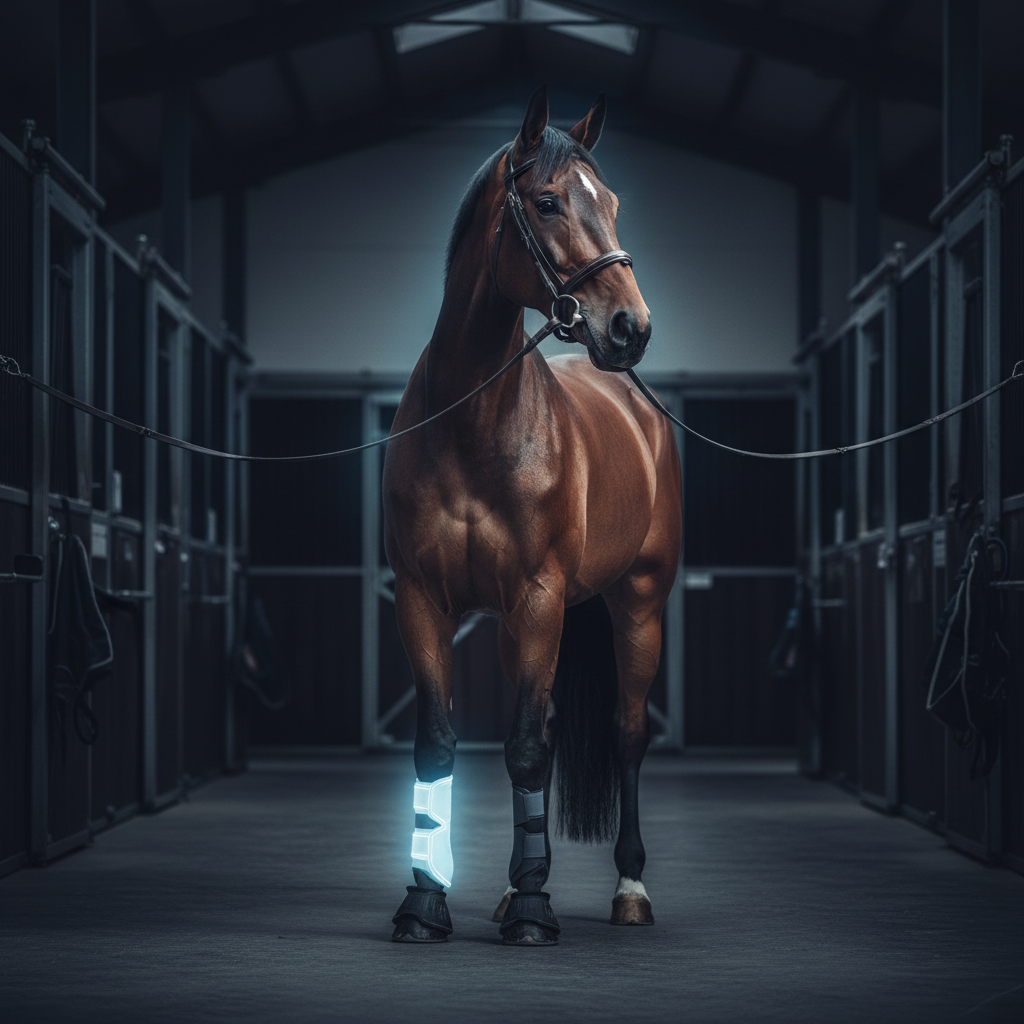
The equine world adopted PEMF therapy decades before mainstream human medicine caught on. Horse trainers, vets, and rehabilitation centres use PEMF for tendon and ligament injuries, kissing spines, back pain, hock and stifle issues, post-surgical recovery, and general training-load management. The mechanism is identical to humans — improved microcirculation, reduced inflammation, accelerated tissue repair — but applied via specialised boots, blankets, and applicators. PEMF is not a banned substance for competition: drug-free, non-invasive, no residue. Used widely in flat racing, jumps, dressage, eventing, and showjumping yards.
Quick facts
- Used for: Tendon/ligament injury, back pain, hock/stifle, post-op
- Equipment: Equine boots, blankets, hand-held applicators
- Sessions: 30–60 min, typically 2–3× per week in active recovery
- Competition safe: No banned-substance issues
- Adopted by: Most major UK racing and dressage yards
Common equine conditions PEMF helps
- Tendon injuries: Superficial digital flexor (SDFT), deep digital flexor (DDFT), suspensory
- Ligament strain: Suspensory branch, check ligament
- Back pain: Kissing spines, sacroiliac dysfunction
- Joint issues: Hock, stifle, fetlock arthritis
- Hoof problems: Laminitis recovery, abscess healing, navicular
- Post-surgical recovery: Bone healing, soft-tissue repair
- Training-load recovery: Daily and weekly recovery for sport horses
Typical equine protocol
| Use case | Frequency | Duration |
|---|---|---|
| Tendon injury | Daily for 1–2 weeks → 2–3× per week | 3–6 months total |
| Back pain | 2–3× per week | 4–8 weeks |
| Training recovery | 1–2× per week | Ongoing |
| Post-op | 3× per week | 4–6 weeks |
Contraindications
Hard exclusions — do not have PEMF if any apply:
- Pacemaker, implantable cardioverter-defibrillator (ICD), or any cardiac electronic device
- Cochlear implant or other implanted electronic hearing device
- Spinal cord stimulator, deep-brain stimulator, vagus nerve stimulator
- Intrathecal pump or implanted drug pump
- Insulin pump (continuous glucose monitors are usually fine — confirm with the clinic)
- Active infection at the treatment site
- Pregnancy — when treatment would be over the abdomen, lumbar spine, or pelvis
Discuss with your GP or specialist before booking if any apply:
- Active malignancy or recent cancer history (oncologist clearance required)
- History of seizures or epilepsy
- Multiple sclerosis or other neurological condition under specialist care
- Anticoagulant therapy (PEMF itself does not thin blood, but bruising risk if local circulation is already compromised)
- Children under 14 (most UK clinics will not treat under-18s without paediatric specialist input)
- Recent surgery within the last 14 days at the treatment site (confirm with surgeon)
NOT contraindications — these are commonly misunderstood:
- Plates, rods, screws and other passive metal orthopaedic hardware
- Dental implants and dental crowns
- Joint replacements (hip, knee, shoulder)
- IUDs (copper or hormonal)
- Tattoos and piercings (jewellery should be removed for the session)
Frequently asked questions
Why is PEMF such a big deal in equine recovery?
Horses live in a world of high mechanical load and slow tendon and bone healing. PEMF accelerates both. The horse-racing and dressage worlds adopted PEMF early — it's now standard kit at most major yards.
What injuries does it help in horses?
Tendon and ligament injuries (suspensory, deep digital, superficial digital), kissing spines and back pain, hock and stifle issues, post-surgery recovery, hoof problems, and general training-load recovery.
Is PEMF safe for horses?
Yes. It is non-invasive, drug-free, and has no banning issues for competition (no drug residue). Always work with a vet for diagnosis and treatment plan.
How do you do PEMF on a horse?
Specialised equine PEMF systems use boots, blankets, or hand-held applicators. Sessions are typically 30–60 minutes. Horses tend to relax visibly during treatment.
Where can I find equine PEMF in the UK?
Many equine vets and rehab centres now offer it. Some yards have on-site equipment. PEMF UK directory will list verified equine providers.
Looking for a PEMF clinic near you?
We list every credible PEMF therapy provider in the UK so you can find one near home.