In 40 seconds
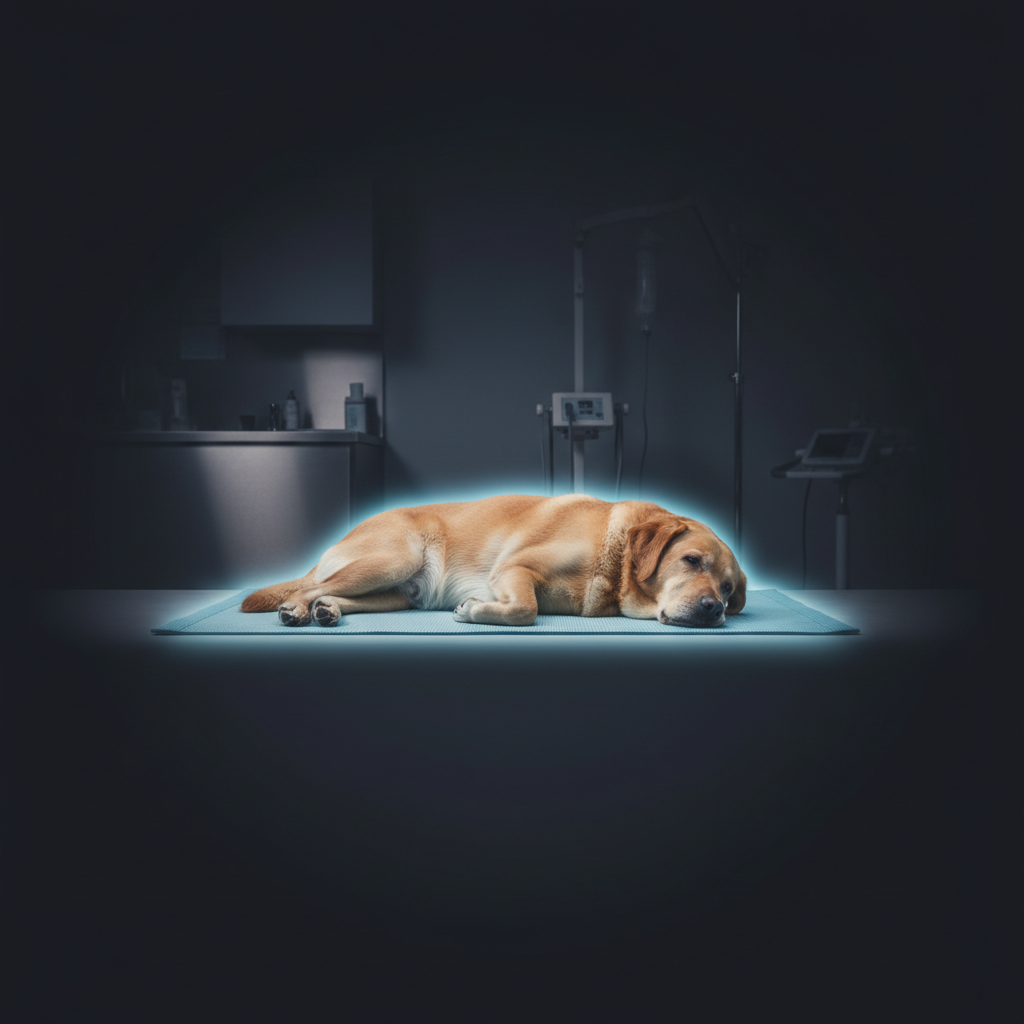
PEMF therapy for dogs is increasingly used in UK veterinary practice as an adjunct for osteoarthritis (the most common reason), post-surgical recovery, intervertebral disc disease (IVDD), wound healing, and degenerative myelopathy support. Unlike human PEMF, canine PEMF is almost always delivered through veterinary or veterinary-physiotherapy practices using devices specifically designed for animal anatomy — pad systems, loop applicators, or whole-body mats sized for dogs. Always seek veterinary referral first; PEMF is an adjunct to, not a replacement for, proper veterinary diagnosis.
Quick facts
- Most common indication: Canine osteoarthritis (estimated 20% of dogs over 1 year)
- Other uses: Post-op recovery, IVDD, wound healing, degenerative myelopathy support
- Pathway: Always via vet referral — direct booking with non-vet PEMF practitioners is not appropriate
- Sessions: 10–30 minutes, 2–3× per week typical
- Best evidence for: Canine OA pain, post-op recovery, IVDD
- Hard exclusion: Active infection at site, malignancy without vet clearance, pregnant bitches over abdomen
Why dogs benefit from PEMF (and where humans differ)
Dogs share much of the cellular biology that PEMF acts on — inflammatory cytokine pathways, osteoblast biology, mitochondrial function, microcirculation. The mechanisms of action documented in human PEMF research transfer well to canine medicine, though the clinical evidence base is smaller.
Where canine PEMF differs from human use:
- Anatomy — devices and applicators are designed for canine body shapes (pad systems, loop applicators, dog-sized mats).
- Session length — typically shorter (10–30 minutes) than human sessions (30–40 minutes).
- Tolerance — most dogs tolerate sessions well; nervous dogs may need familiarisation, treats, and a calm handler.
- Veterinary supervision — the diagnosis and oversight should always be a vet's, not a non-veterinary practitioner's.
UK pathway typically begins with veterinary diagnosis (clinical examination, X-ray, sometimes MRI), then PEMF as adjunct alongside conventional veterinary care: NSAIDs (meloxicam, carprofen, robenacoxib), weight management, structured exercise, and where appropriate physiotherapy (the Canine Massage Guild, ACPAT-registered physios, and McTimoney chiropractors all sometimes incorporate PEMF).
Most common indications
Canine osteoarthritis (OA) — by far the most common indication. An estimated 20% of dogs over 1 year have radiographic OA; 80% of dogs over 8. PEMF reduces inflammation in the affected joint, supports cartilage cell function, and helps dogs stay active despite degenerative change.
Post-surgical recovery — particularly orthopaedic surgery (TPLO for cruciate ligament rupture, hip replacement, fracture repair). The same FDA-cleared mechanism that supports human post-op recovery applies to dogs. Veterinary surgeons increasingly recommend PEMF in the first 6–8 weeks post-op.
Intervertebral Disc Disease (IVDD) — common in dachshunds, basset hounds, beagles and other chondrodystrophic breeds. PEMF supports nerve healing and inflammation control alongside conservative management or post-surgical recovery.
Wound healing — chronic wounds, surgical sites, hot spots. PEMF supports tissue repair through the same cellular mechanisms as in human medicine.
Degenerative myelopathy — a progressive spinal cord disease most common in German Shepherds. There's no cure; PEMF is sometimes used as supportive comfort care alongside physiotherapy and assistive equipment.
Typical UK protocol
| Indication | Frequency | Course length | Goal |
|---|---|---|---|
| OA flare | 3× per week | 4 weeks loading, then weekly | Pain reduction, function |
| Post-op (TPLO, etc.) | 2–3× per week | 6–8 weeks | Faster healing, return to function |
| IVDD conservative | 3× per week | 6 weeks | Nerve healing, pain |
| Wound healing | 2× per week | Until healed | Tissue repair |
Track quality-of-life and pain using a structured tool — the Canine Brief Pain Inventory (CBPI) for OA, owner-rated mobility scales for IVDD. Without numbers it's hard to judge whether PEMF is making a difference.
What the evidence shows
- Multiple veterinary studies report reduced pain scores and improved mobility in dogs with osteoarthritis after PEMF courses, alongside or compared to NSAIDs alone.
- Post-surgical use in TPLO and other orthopaedic procedures shows faster healing markers and reduced post-op opioid requirement.
- IVDD evidence supports PEMF as an adjunct in conservative management — particularly for dogs that are not surgical candidates.
- The ACPAT (Association of Chartered Physiotherapists in Animal Therapy) and a growing number of UK vet practices use PEMF as standard.
- The honest position: PEMF is one of the better-evidenced veterinary adjuncts, particularly for canine OA — but should always sit alongside, not replace, NSAIDs, weight management and structured exercise.
Practical advice for owners
- Always go via your vet first — diagnosis matters. Don't book PEMF for an undiagnosed limp.
- Continue prescribed NSAIDs unless your vet specifically advises otherwise. PEMF may eventually reduce NSAID need but the decision is your vet's.
- Weight management is the single biggest lever in canine OA — every kilogram off a 20kg dog is meaningful.
- Watch for nervous dogs — bring familiar treats, allow a familiarisation visit, work with the practitioner on calming.
- Track CBPI or mobility scale — without numbers you can't tell if it's working.
- Home devices exist — for dogs needing long-term PEMF, dedicated canine PEMF mats and loops are available. Cost-effective above ~12 sessions.
Related guides on PEMF UK
PEMF therapy for horses
The other major animal indication — different anatomy, similar principles.
Cross-speciesPEMF for knee OA (humans)
Same biology, different anatomy.
Post-opPEMF for post-surgical recovery
The human evidence base that supports veterinary use.
Contraindications
Hard exclusions — do not have PEMF if any apply:
- Pacemaker, implantable cardioverter-defibrillator (ICD), or any cardiac electronic device
- Cochlear implant or other implanted electronic hearing device
- Spinal cord stimulator, deep-brain stimulator, vagus nerve stimulator
- Intrathecal pump or implanted drug pump
- Insulin pump (continuous glucose monitors are usually fine — confirm with the clinic)
- Active infection at the treatment site
- Pregnancy — when treatment would be over the abdomen, lumbar spine, or pelvis
Discuss with your GP or specialist before booking if any apply:
- Active malignancy or recent cancer history (oncologist clearance required)
- History of seizures or epilepsy
- Multiple sclerosis or other neurological condition under specialist care
- Anticoagulant therapy (PEMF itself does not thin blood, but bruising risk if local circulation is already compromised)
- Children under 14 (most UK clinics will not treat under-18s without paediatric specialist input)
- Recent surgery within the last 14 days at the treatment site (confirm with surgeon)
NOT contraindications — these are commonly misunderstood:
- Plates, rods, screws and other passive metal orthopaedic hardware
- Dental implants and dental crowns
- Joint replacements (hip, knee, shoulder)
- IUDs (copper or hormonal)
- Tattoos and piercings (jewellery should be removed for the session)
Specific to this condition: PEMF for dogs should always be done via vet referral. Don't apply over fractures with metal implants where contraindicated by the vet, over open wounds, or when active infection is present. Pregnant bitches: avoid sessions over the abdomen.
Frequently asked questions
Is PEMF safe for dogs?
Yes, with veterinary oversight and respect for contraindications (active infection at the site, certain malignancies without vet clearance, pregnancy abdomen). Most dogs tolerate sessions well after a familiarisation visit.
Will PEMF cure my dog's arthritis?
No — canine OA is a progressive structural condition. PEMF can meaningfully reduce pain and improve mobility, often allowing reduction in NSAID dose, but it doesn't reverse cartilage degradation.
How many sessions before I see improvement?
Most owners report visible improvement (more willing to walk, better stair use, less stiffness on rising) within 3–4 weeks of 2–3× weekly sessions. CBPI tracking gives more objective measurement.
Should I get a home PEMF mat for my dog?
If your dog needs long-term PEMF (chronic OA, IVDD, ongoing post-op recovery), a home mat works out cheaper than 12+ clinic sessions. Dedicated canine devices (Assisi loops, FlexPulse, etc.) are available; budget £500–£3,000.
Will my vet prescribe PEMF?
Most UK vets will refer to a veterinary physiotherapist who uses PEMF. A growing number of practices have their own devices. ACPAT-registered physiotherapists routinely use PEMF as part of canine rehab.
What's the UK cost?
Typical UK veterinary PEMF session: £30–£70. Vet physio packages including PEMF: £300–£600 for a 6-week course. Home device: £500–£3,000 one-off.
Find a PEMF clinic near you
We list every credible PEMF therapy provider in the UK so you can find one near home.