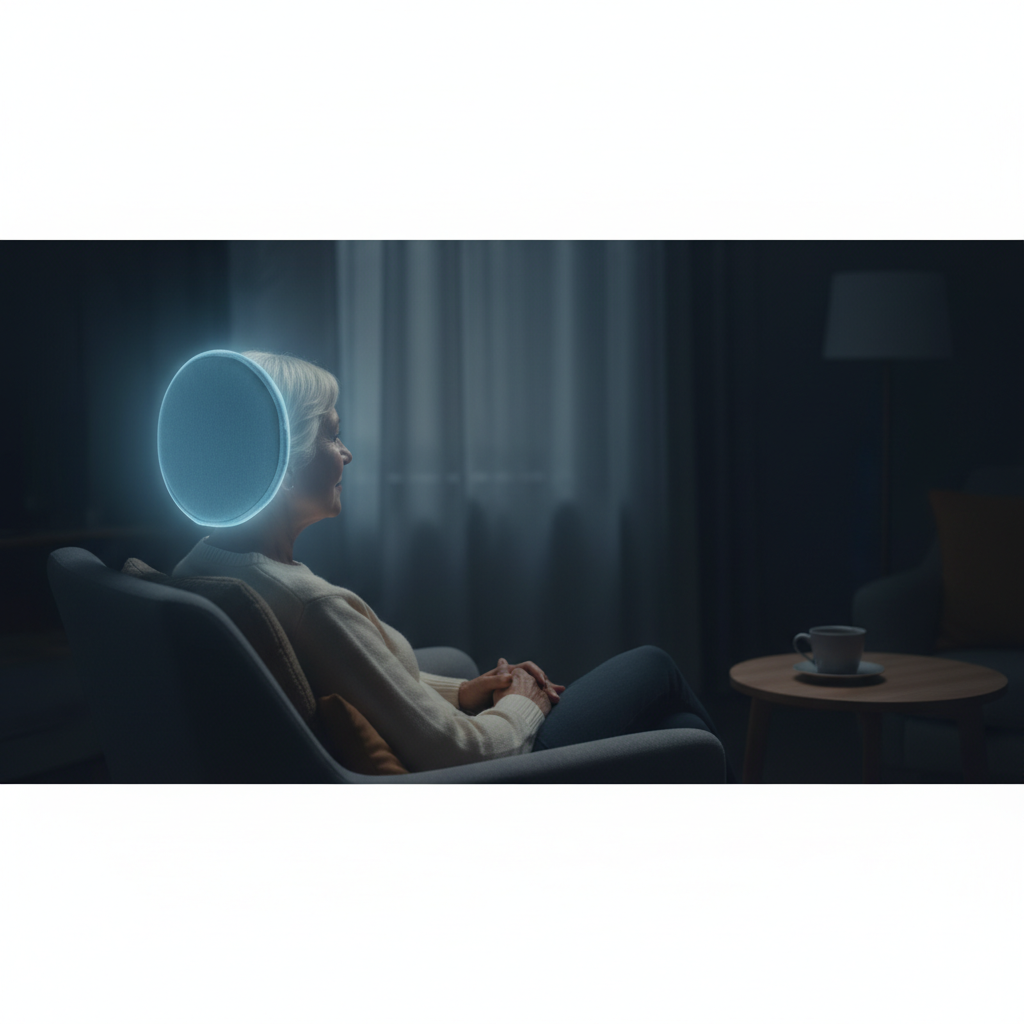
In 40 seconds
Across 17+ RCTs and the Wang 2022, Yang 2023 and Chu 2024 meta-analyses, rTMS plus cognitive training shows a small-to-moderate cognitive benefit in mild Alzheimer's — typically a 1.5–3 point ADAS-cog improvement at the cohort level. The strongest single trial is Koch 2022 in Brain (precuneus stimulation, n=50) [3], extended to 52 weeks in 2025 [10]. The largest 2024 multisite trial without cognitive training was null [8]. NICE NG97 (2018) recommends against transcranial magnetic stimulation for Alzheimer's outside a clinical trial. The FDA panel voted 14-0 against NeuroAD de novo clearance in 2019. The UK ASA upheld a complaint against advertising rTMS as an Alzheimer's treatment in 2018. Low-intensity consumer PEMF mats have no completed sham-controlled human RCT in Alzheimer's.
Quick facts
- Best-supported protocol: 10–20 Hz rTMS to multi-site cortex + computerised cognitive training, 5 sessions/week × 6 weeks
- Effect size: SMD ~0.5–0.7 on cognitive measures (low-to-moderate certainty)
- Strongest single trial: Koch 2022 precuneus rTMS, n=50, Brain — CDR-SB stable at 24 weeks; sustained at 52 weeks
- Largest null trial: Wei 2024 multisite — stand-alone DLPFC rTMS without cognitive training showed no benefit
- UK regulatory: NICE NG97: do NOT offer outside a clinical trial
- Consumer PEMF: No completed sham-controlled human RCT in Alzheimer's
- Standard care: Cholinesterase inhibitors, memantine, anti-amyloid antibodies (lecanemab, donanemab) where indicated, cognitive stimulation therapy
What the published trials actually show
The Alzheimer's rTMS literature splits into three clusters: combined rTMS-plus-cognitive-training trials (the NeuroAD lineage), precuneus-targeted trials (the Koch lineage), and stand-alone rTMS trials (the Wei 2024 null result).
The NeuroAD lineage
Rabey 2013 was the original sham-controlled pilot (n=15): 10 Hz rTMS to six cortical sites paired with immediately-paired computerised cognitive training, 5 days a week for 6 weeks. ADAS-cog improved 3.76 points more than sham at 6 weeks (p=0.03) and 3.52 points at 4.5 months. The Sabbagh 2020 pivotal multicentre RCT (n=131) failed to replicate this on the whole cohort — the 7-week ADAS-cog primary endpoint was not met. The pre-specified milder-AD subgroup (baseline ADAS-cog ≤30) showed a 1.93-point ADAS-cog improvement vs sham at 12 weeks (p=0.012). The device received European CE marking but the FDA panel voted 14-0 against de novo clearance for Alzheimer's in March 2019, and the UK ASA upheld a complaint against advertising it as a treatment in 2018.
The Koch precuneus lineage
Koch et al. 2022 in Brain (n=50) is the strongest single-trial signal in the field. 20 Hz rTMS to the precuneus — a default-mode-network hub — for 2 weeks daily plus 22 weeks weekly maintenance held CDR-SB stable in the active arm while the sham arm deteriorated. The 2025 52-week extension sustained the effect. Mechanistically, the precuneus is among the earliest cortical regions to lose effective connectivity in Alzheimer's, which gives the result biological coherence.
The 2024 null trial
Wei et al. 2024 in Brain Stimulation tested stand-alone DLPFC rTMS without cognitive training in a multisite RCT and found no statistically significant superiority over sham. The authors flagged the absence of paired cognitive training and the DLPFC-only target as plausible reasons for the divergence from NeuroAD-style protocols. This is the most important negative trial in the field and deserves to be cited alongside any positive headline.
Where consumer PEMF sits
Low-intensity consumer PEMF — the kind of mat sold for home use in the UK — has no completed sham-controlled human RCT in Alzheimer's. The supportive evidence is preclinical (Capelli 2017 cell-culture work on miRNA modulation and BACE1 reduction; the 2024 in-vitro paper on microglial polarisation) plus small open-label TEMT pilots run by the device manufacturer (Arendash 2019, n=8; Cao 2022, n=5). TEMT uses 918 MHz radiofrequency — a different modality from the low-frequency consumer PEMF being sold in UK wellness markets.
What this means for a UK family
If a memory clinic offers a trial place for rTMS, that is the safest route to evidence-based magnetic stimulation. If a private practitioner offers rTMS for Alzheimer's outside a trial, ask for the specific claim in writing and check it against the ASA's 2018 ruling. If a salesperson offers a £2,000 PEMF mat as an Alzheimer's treatment, that is overpromising — the device may have legitimate wellness uses for the carer, but it is not what the clinical trials studied.
Frequently asked questions
Does rTMS slow Alzheimer's progression?
The Koch 2022 trial (n=50) and its 2025 52-week extension suggest CDR-SB can be stabilised over 1 year with precuneus rTMS. This is the strongest published signal. It is not the same thing as reversing the disease. The Wang 2022, Yang 2023 and Chu 2024 meta-analyses show small-to-moderate cognitive improvement on group measures, with low-to-moderate certainty.
Is NeuroAD available in the UK?
It has been marketed in the UK by private clinics. The 2018 ASA ruling against Neuronix prevented advertising it as 'a new treatment for Alzheimer's disease' in its previous form. NICE NG97 (2018) explicitly recommends against rTMS for Alzheimer's outside a clinical trial. NHS England does not commission it for dementia.
Why did Wei 2024 fail when other trials worked?
Wei used stand-alone DLPFC rTMS without paired cognitive training. The trials that showed benefit (Sabbagh 2020, Rabey 2013, Bagattini 2020) used multi-site stimulation paired with cognitive training delivered immediately after each pulse train. Protocol design matters more than the device brand.
Should I stop my mum's donepezil to try PEMF?
No. Cholinesterase inhibitors (donepezil, rivastigmine, galantamine) and memantine have established evidence and should never be stopped to substitute an unproven alternative. Any non-pharmacological adjunct should be discussed with the memory clinic, not added unilaterally.
What about anti-amyloid antibodies like lecanemab?
Lecanemab and donanemab are antibody therapies that reduce decline rate in early Alzheimer's. As of 2026 they are NICE-recommended in narrow circumstances. They are not magnetic stimulation, but they are part of the same conversation about evidence-based options. Magnetic stimulation has been studied as a possible adjunct, not a replacement.
Can a PEMF mat at home help my husband's memory?
There is no completed sham-controlled human RCT showing a home PEMF mat improves memory in Alzheimer's. The biology is plausible at the cellular level, but biology does not equal clinical effect. The Wei 2024 null trial of clinical-grade rTMS without cognitive training reinforces this. Frame any home PEMF use as wellness for the carer rather than treatment for the person being cared for.
Is the Arendash TEMT research relevant?
TEMT uses 918 MHz radiofrequency — a different modality from consumer low-frequency PEMF. The Arendash 2019 pilot (n=8, open-label, no sham) and Cao 2022 extension (n=5, no sham) showed cognitive stabilisation, but the conflict of interest is significant — Arendash is founder and CEO of the manufacturer, NeuroEM Therapeutics. The findings are hypothesis-generating, not confirmatory.
What does the Alzheimer's Society say?
The Alzheimer's Society UK does not endorse rTMS or PEMF as treatments for Alzheimer's. The Society publicly supported the 2018 ASA upheld complaint against Neuronix, calling the supporting research 'preliminary studies which are not the same as robust clinical trials.'
Are there UK trials I can enrol in?
ClinicalTrials.gov is the central registry. The UK Dementia Research Institute and major neurology centres in London, Cambridge and Manchester recruit for cognition-related trials. Most published rTMS-in-AD trial activity is currently in Italy (Koch group), the US, Israel and China — UK trial recruitment is more limited.
How long would a course of rTMS take?
The protocols that showed benefit ran daily 5 days a week for 2–6 weeks, sometimes with weekly maintenance for months (Koch 2022 ran 2 weeks daily plus 22 weeks weekly). Outcomes are measured at 6–12 weeks. Individual response is variable — group-level signal does not guarantee personal benefit.
Related dementia pages on PEMF UK
Looking for a PEMF clinic in the UK?
We list every credible PEMF therapy provider in the UK. Please remember: no UK clinic can legally claim to treat dementia with PEMF or rTMS.