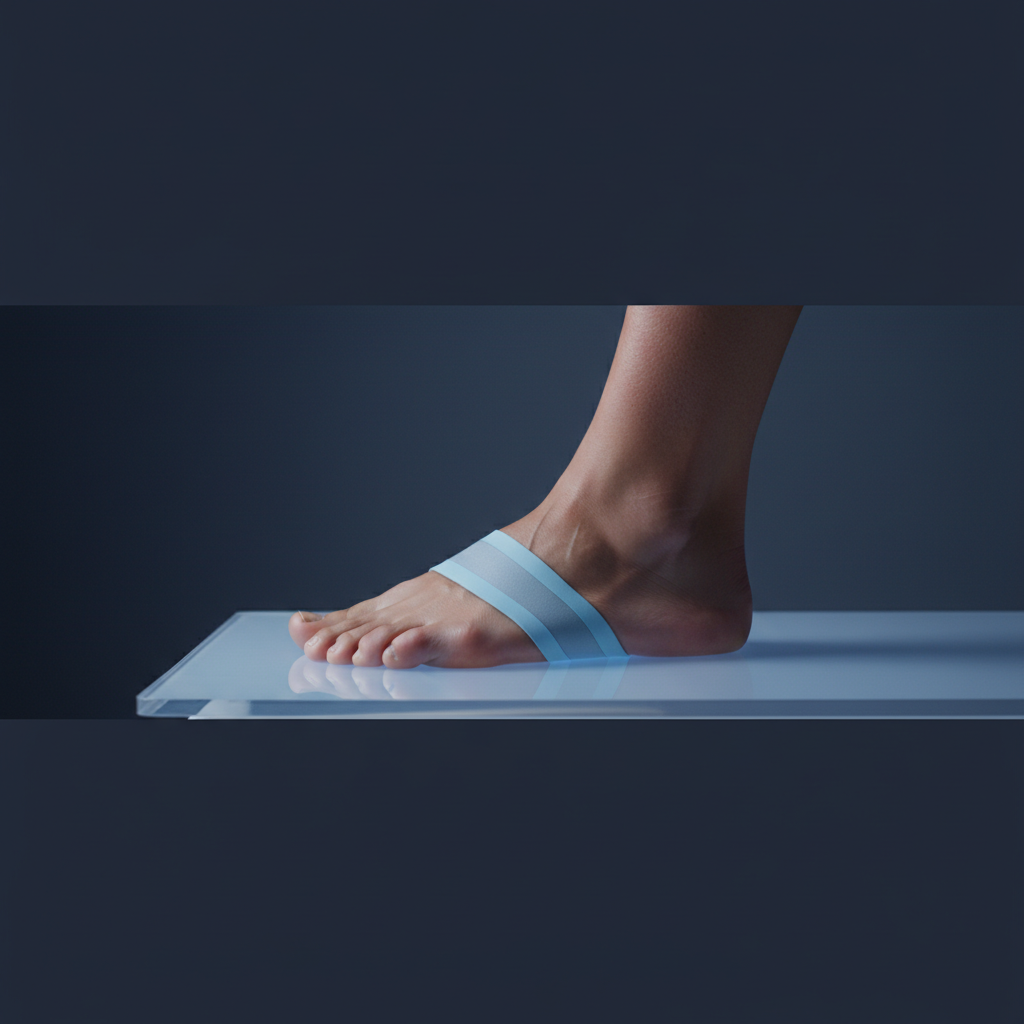
In 40 seconds
Plantar fasciitis is one of the most common causes of heel pain in adults. The plantar fascia — a thick band of tissue along the sole of the foot — becomes irritated, painful, and slow to heal. PEMF therapy reduces inflammation around the fascia, improves microcirculation, and accelerates cellular repair, particularly when combined with progressive calf and intrinsic foot strengthening (Rathleff protocol). Typical UK protocol: 2–3 sessions per week for 4–6 weeks alongside a structured loading programme.
Quick facts
- Lifetime prevalence: ~10% of adults will experience it
- Risk factors: Running, prolonged standing, high BMI, tight calves, flat or high-arched feet
- Standard care: Progressive calf strengthening (Rathleff protocol)
- PEMF role: Reduces inflammation, accelerates healing
- Sessions: 2–3× per week for 4–6 weeks
- Avoid: Repeat steroid injections (rupture and fat-pad atrophy risk)
What plantar fasciitis actually is
The plantar fascia is a thick fibrous band that runs from the heel bone to the base of the toes, supporting the arch and absorbing shock with each step. Repeated overload — running, prolonged standing, abrupt training increases — produces micro-tears at the heel attachment that fail to heal cleanly. The result is morning heel pain (worst on first steps), pain after rest, and pain after prolonged loading.
Modern understanding views plantar fasciitis as a degenerative condition (more accurately "plantar fasciopathy") rather than purely inflammatory — though inflammation does play a role, particularly in earlier stages.
How PEMF helps the plantar fascia
- Reduces inflammatory cytokines around the fascial attachment
- Increases microcirculation in the heel — fascia and fat pad have notoriously poor blood supply
- Supports fibroblast and tenocyte-like cell repair within the fascia
- Reduces pain enough to allow proper loading exercises
Typical UK protocol
| Phase | Frequency | Duration | What happens |
|---|---|---|---|
| Acute | 3× per week | 2 weeks | Localised PEMF applicator over heel, 20 min |
| Loading | 2× per week | Weeks 3–6 | PEMF + Rathleff calf raises (heavy slow resistance) |
| Return to sport | 1× per week | Weeks 7–10 | Reduced PEMF, progressive return to running |
Alongside the rest of your care
- Rathleff protocol — heavy slow resistance calf raises with the toes extended over a rolled towel
- Daily calf and plantar fascia stretching
- Supportive footwear (avoid flat shoes during recovery)
- Weight management if applicable
- Avoid repeated steroid injections — they're linked to fascia rupture and fat-pad atrophy
Contraindications
Hard exclusions — do not have PEMF if any apply:
- Pacemaker, implantable cardioverter-defibrillator (ICD), or any cardiac electronic device
- Cochlear implant or other implanted electronic hearing device
- Spinal cord stimulator, deep-brain stimulator, vagus nerve stimulator
- Intrathecal pump or implanted drug pump
- Insulin pump (continuous glucose monitors are usually fine — confirm with the clinic)
- Active infection at the treatment site
- Pregnancy — when treatment would be over the abdomen, lumbar spine, or pelvis
Discuss with your GP or specialist before booking if any apply:
- Active malignancy or recent cancer history (oncologist clearance required)
- History of seizures or epilepsy
- Multiple sclerosis or other neurological condition under specialist care
- Anticoagulant therapy (PEMF itself does not thin blood, but bruising risk if local circulation is already compromised)
- Children under 14 (most UK clinics will not treat under-18s without paediatric specialist input)
- Recent surgery within the last 14 days at the treatment site (confirm with surgeon)
NOT contraindications — these are commonly misunderstood:
- Plates, rods, screws and other passive metal orthopaedic hardware
- Dental implants and dental crowns
- Joint replacements (hip, knee, shoulder)
- IUDs (copper or hormonal)
- Tattoos and piercings (jewellery should be removed for the session)
Frequently asked questions
Does PEMF actually work for plantar fasciitis?
Multiple small trials report PEMF reduces heel pain and improves function in plantar fasciitis. The mechanism — reduced inflammation around the plantar fascia and improved microcirculation in the heel — is well supported. Most clinics use it alongside calf and intrinsic foot strengthening, which is the foundation of treatment.
How long does plantar fasciitis usually take to settle?
With proper treatment (loading, footwear, weight management, PEMF), most cases settle in 6–12 weeks. Stubborn cases can run 6 months or longer. PEMF can shorten the timeline but won't replace the calf strengthening work.
What's the strongest evidence-based treatment for plantar fasciitis?
High-load progressive calf and intrinsic foot strengthening exercises (Rathleff protocol) is the strongest single intervention. Add PEMF, appropriate footwear, and night splinting in stubborn cases. Steroid injections work short-term but are linked to plantar fascia rupture and fat-pad atrophy.
Can I keep running while having PEMF?
Modified running, yes — likely with reduced volume and intensity for 4–6 weeks. PEMF will accelerate recovery alongside load management. Continuing to load the irritated fascia at full intensity will slow progress regardless of treatment.
How many sessions?
Typically 2–3 per week for 4–6 weeks, then taper. Stubborn cases benefit from longer programmes.
Are heel spurs the cause of plantar fasciitis?
Heel spurs are a finding, not the cause. Many people have spurs without pain; many people with plantar fasciitis have no spur. Treatment is the same regardless.
Looking for a PEMF clinic near you?
We list every credible PEMF therapy provider in the UK so you can find one near home.