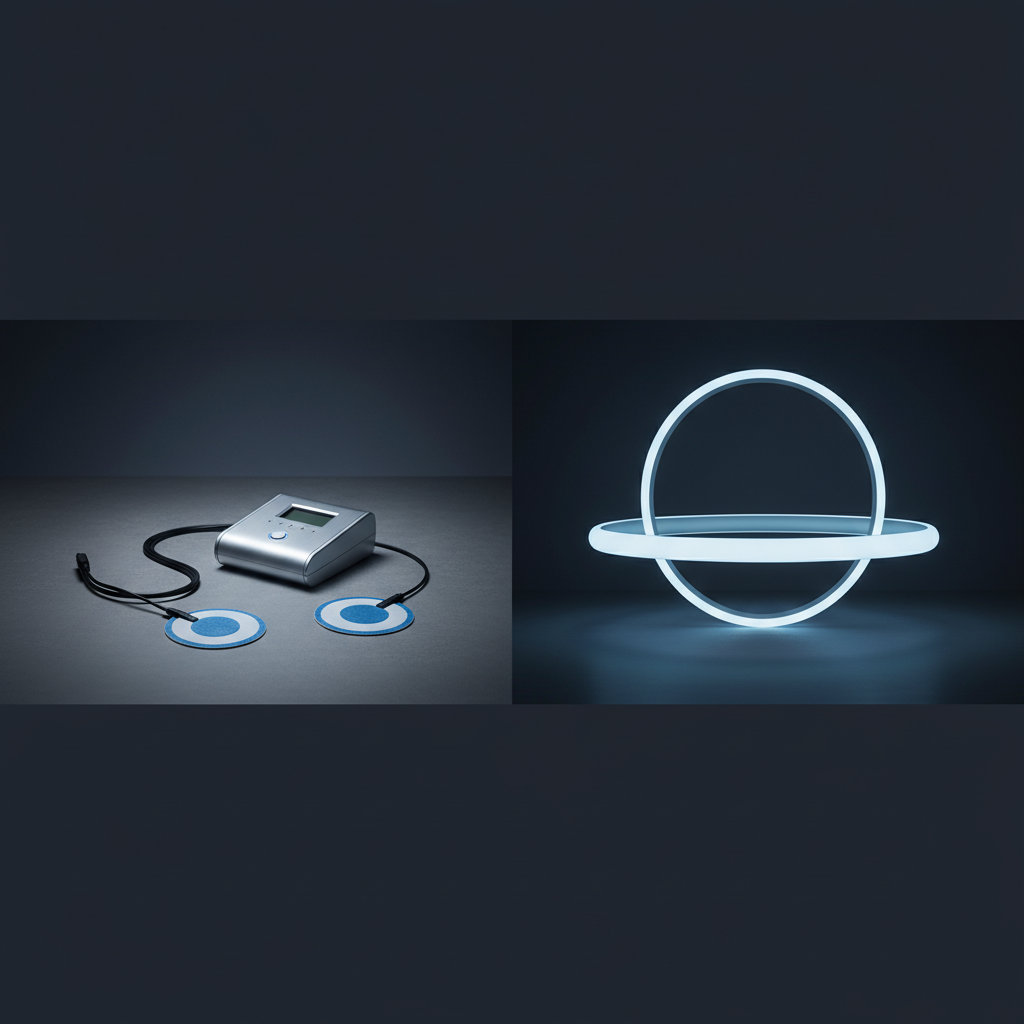
PEMF therapy for pemf vs tens — how they differ, when to choose which
PEMF UKCOMPARISON · PEMF vs TENS

PEMF vs TENS — how they differ, when to choose which

PEMF and TENS are often confused but operate through completely different mechanisms. TENS interrupts pain signals at the spinal cord level. PEMF supports cellular healing. Both have their place.

Reviewed 2026-05-08

In 40 seconds

PEMF (Pulsed Electromagnetic Field) and TENS (Transcutaneous Electrical Nerve Stimulation) both reduce pain non-pharmacologically — but the mechanisms are different. TENS uses surface electrodes to deliver electrical pulses that interrupt pain signals at the spinal cord (the 'gate control' theory) — fast onset, fast offset, useful during pain episodes. PEMF uses pulsed magnetic fields that penetrate tissue and influence cellular biology — slower onset, longer-lasting effect, addresses healing not just symptom-management. Most patients with chronic conditions benefit from both.

Quick facts

How TENS actually works

TENS (Transcutaneous Electrical Nerve Stimulation) delivers low-voltage electrical pulses through self-adhesive electrodes placed on the skin near a painful area. The pulses stimulate large-diameter sensory nerve fibres, which according to the Gate Control Theory of pain (Melzack and Wall, 1965) compete with pain-carrying nerve fibres at the spinal cord — effectively "closing the gate" on pain signal transmission.

The effect is essentially symptomatic: TENS doesn't change the underlying tissue or biology, it interrupts the conscious experience of pain while the device is running. Effects typically last only minutes to a couple of hours after the device is switched off.

TENS is widely used in UK pain management — particularly for labour pain, chronic back pain, post-surgical pain, and dysmenorrhoea. It's available cheaply over-the-counter (£20–£100 for a basic unit) and is very safe for most users.

How PEMF actually works

PEMF (Pulsed Electromagnetic Field) therapy delivers low-frequency magnetic pulses that penetrate the body's tissues. Unlike TENS, the pulses don't stay on the skin surface — they reach into deeper tissue and influence cellular processes.

Documented mechanisms:

The clinical effect is biological change rather than signal blocking. Pain reduction emerges from reduced inflammation, better-circulated tissue, and faster healing rather than from interrupted pain signal transmission.

Side-by-side comparison

FeatureTENSPEMF
MechanismElectrical signal at spinal cordMagnetic field at cellular level
Penetration depthSurface (sensory nerves)Whole tissue (centimetres)
OnsetMinutesDays to weeks
Duration of effect after useMinutes to a few hoursCumulative; persists between sessions
Best forAcute pain episodes, labourChronic conditions, healing support
Treats underlying biology?No (signal interruption only)Yes (inflammation, circulation, healing)
Home useYes — £20–£100 unitYes — £1,500–£8,000 device, plus clinic options
FDA / MHRA clearedYes, multiple indicationsYes, non-union fractures (1979) + others
ContraindicationsPacemaker, ICD, pregnancy abdomenSame plus more (see contra block)

When to choose which

Choose TENS for:

Choose PEMF for:

Use both if: You have a chronic pain condition where PEMF addresses the underlying biology over weeks, while TENS gives you tools for the acute flare days. Many UK pain clinics use both modalities and patients find them complementary, not competing.

Practical advice

Related guides on PEMF UK

Comparison

PEMF vs Therapeutic Ultrasound

Different mechanisms, different use cases.

Comparison

PEMF vs Red Light Therapy

Often paired modalities — what each does best.

Comparison

PEMF vs Steroid Injection

For inflammatory conditions, the comparison most patients face.

Contraindications

Hard exclusions — do not have PEMF if any apply:

Discuss with your GP or specialist before booking if any apply:

NOT contraindications — these are commonly misunderstood:

Specific to this condition: TENS and PEMF share several contraindications — pacemaker, ICD, and other electronic implants exclude both. Confirm with your clinician which is appropriate for your condition.

Frequently asked questions

Can I use TENS and PEMF together?

Yes — and many patients with chronic pain do exactly that. PEMF for the slow biological work over weeks; TENS for acute flare days. They don't interfere with each other. Don't run them simultaneously on the same body region — separate them by at least 30 minutes.

Why is TENS so much cheaper than PEMF?

TENS units are simple — they're essentially low-voltage pulse generators with surface electrodes. PEMF devices generate pulsed magnetic fields strong enough to penetrate tissue, which requires more substantial electronics, coils and power. Different engineering, different price.

Will TENS heal my injury?

No. TENS interrupts pain signals while it's running; it doesn't change the underlying tissue. PEMF (and graded loading, time, nutrition) heals injuries; TENS makes the healing period less painful.

Will PEMF give me immediate pain relief like TENS?

Generally no. PEMF works through cellular biology over days and weeks. Some patients report mild relaxation during a session, but the meaningful pain reduction usually emerges over 4–8 weeks of regular use.

Are both safe with a pacemaker?

Neither is safe with a pacemaker. Both TENS and PEMF can interfere with pacemaker function. This is non-negotiable.

Which has stronger evidence?

TENS has stronger evidence for acute pain reduction and several specific applications (labour, dysmenorrhoea, post-op pain). PEMF has stronger evidence for healing-related applications (non-union fractures, post-surgical recovery, bone density). Different evidence bases for different uses.

Find a PEMF clinic near you

We list every credible PEMF therapy provider in the UK so you can find one near home.